Ball Valve Manufacturer in India: Types, Uses and Selection Guide
Understand common ball valve types, end connections, industrial uses and the technical details to check before selecting a valve for your process line.
By PUNIT VALVES Technical Team ·
Introduction
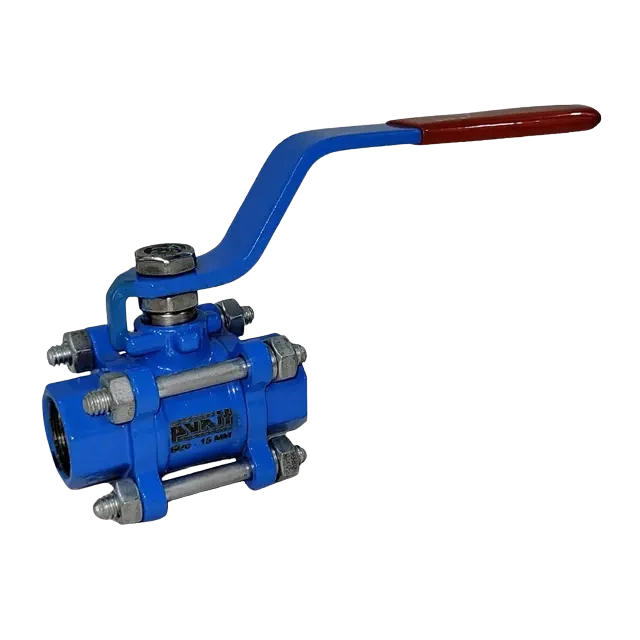
What should a buyer look for in a ball valve manufacturer in India? Start with the actual valve model, its end connection, nominal size, operating pressure and temperature, media compatibility, and the documentation needed for the installation. A product photograph is useful for identification, but final selection depends on confirmed specifications rather than appearance alone.
PUNIT VALVES, established in 2022 in Bilimora, Gujarat, India, is an industrial valve manufacturer with a primary focus on Ball Valves. Our range also includes Butterfly, Gate, Globe, Check and Needle Valves. This guide explains the Ball Valve configurations shown in our catalogue and the information industrial purchasers should check before ordering.
For a quick decision: a Ball Valve is a quarter-turn shut-off device; threaded and socket-end configurations are considered for compatible small-bore piping, while flanged designs suit installations requiring matching flange connections. The appropriate model still depends on the complete operating conditions.
Product Overview
An industrial Ball Valve controls flow by rotating a ball with a passage through it. The lever or actuator turns the ball between open and closed positions. The valve body, ball, seat, stem and connections must be suitable for the service in which the valve is installed.
Our current Ball Valve catalogue covers seven named configurations. They are not interchangeable simply because they all operate with a quarter turn.
| Ball Valve in the PUNIT VALVES range | Design or connection distinction | Relevant buyer check |
|---|---|---|
| Screw End - 1 Piece Ball Valve | Single-piece body, screw-end connection | Thread specification, size, medium |
| 3-Piece Screw End / Socket End Ball Valve | Three-piece body with screwed or socket-weld options | Connection type, maintenance access, pressure rating |
| Flange End - 1 Piece Ball Valve | Flanged ends with one-piece construction | Flange dimensions and mating pipework |
| Flange End - 2 Piece Ball Valve | Two-piece flanged construction | Pressure class, face-to-face dimensions |
| Flange End - 3 Piece Ball Valve | Three-piece flanged construction | Maintenance arrangement and connection requirements |
| Wafer Type Ball Valve | Wafer-style installation format | Flange compatibility and installation clearance |
| TC End Ball Valve | TC-end connection | Connection interface and intended process service |
This overview is a starting point. For a quotation, always identify the specific product name or REF ID so that the selected construction is unambiguous.
Technical Specifications
A useful technical specification sheet should identify the valve size, temperature and pressure rating, design and testing references, operation and end connection. These values must belong to the actual model being discussed, not a generic Ball Valve category.
The following is an illustrative catalogue example for the PUNIT VALVES 3-Piece Screw End / Socket End Ball Valve — #REFC761. These are the supplied catalogue specifications; confirm the current approved datasheet and application suitability before placing an order.
| Specification | Catalogue information for #REFC761 |
|---|---|
| Product | 3-Piece Screw End / Socket End Ball Valve |
| Size range | 15 mm to 100 mm (½″ to 4″) |
| Temperature range | −40 °C to +180 °C |
| Pressure rating | 1000 WOG; 22 kg/cm² — verify rating against approved datasheet |
| Design standard | As per ISO 17292 / BS 5351 |
| Face-to-face | Manufacturer’s Standard |
| Testing reference | As per API 598 |
| Leakage class | ISO 5208 Class VI |
| Operation | Manual hand lever |
| End connection | Screwed (BSP-F) / Socket Weld |
Why the REF ID matters: #REFC761 identifies this particular three-piece model. A buyer asking for another flanged or wafer-type model should quote its own REF ID rather than reuse the values above. See the specific 3-piece Ball Valve product page for the product entry and enquiry link.
Manufacturing Process
Industrial Ball Valve manufacturing involves multiple stages of dimensional control and assembly. The exact process, inspection methods and quality documents depend on the valve design and applicable purchase requirements. The following is a general process outline, not a claim that every machine, test or certification is used for every PUNIT VALVES model.
- Review of design and requirements: confirm the valve type, nominal size, material specification, end connections and referenced standards.
- Body and component preparation: valve bodies and components are produced or machined to the required geometry and tolerances for the selected design.
- Assembly: the ball, seats, stem and related sealing components are assembled according to the model's construction.
- Inspection and applicable testing: dimensional checks and the specified pressure or leakage tests are considered in line with the approved documentation and order requirements.
- Identification and dispatch: product identity, agreed specifications, order quantity and required documentation should be checked before dispatch.
Buyers can request available test reports, inspection records or product documentation during the quotation stage. Do not assume a certification or test result applies unless it is confirmed for the particular product and order.
Applications
Ball Valves may be considered where a pipeline requires manual or actuated on/off service and the chosen materials and ratings are appropriate. Typical industrial selection discussions include:
- Manufacturing utilities: isolation points on water, compatible compressed-air or general utility lines.
- Process piping: shut-off points serving production equipment, subject to the chemical and thermal service conditions.
- Water handling: selected treatment, transfer or distribution installations where the construction suits the duty.
- Equipment connections: isolation near pumps, skids or machinery, with space provided for the valve operator and maintenance.
- Special connection needs: threaded, flanged, socket-weld, wafer or TC-end arrangements as required by the system design.
These are application categories, not universal suitability statements. For example, an aggressive medium, high operating temperature or special hygiene requirement can change the material and valve selection entirely.
Key Benefits
A suitable Ball Valve can provide several practical advantages in an industrial installation:
- Quarter-turn operation: straightforward open/close operation using a suitable lever or actuator.
- Multiple connection formats: the catalogue includes screw-end, socket-end, flanged, wafer-type and TC-end designs.
- Model choice: one-piece, two-piece and three-piece configurations provide different construction and maintenance considerations.
- Clear product identification: names and unique product REF IDs help reduce confusion when discussing an order.
- Application-driven specification: a documented comparison of media, temperature, pressure, connection and size makes procurement communication clearer.
A benefit only applies when the chosen model meets the actual service requirements. For instance, three-piece construction can assist maintenance planning, but suitability depends on the installation, design and manufacturer's approved instructions.
Selection Guide
Use this simple checklist when preparing a Ball Valve enquiry. It also makes it easier for the manufacturing team to understand the operating conditions before confirming a product.
| Selection question | Information to provide |
|---|---|
| What will flow through the line? | Medium, concentration and any special compatibility requirements |
| What are the working conditions? | Normal and maximum pressure, temperature and relevant operating cycles |
| Which size and connection are needed? | Nominal size, thread type or flange/socket/TC arrangement |
| Which material is specified? | Body, ball/trim, seat and seals where known |
| How will the valve be operated? | Manual or actuated; operating frequency and available clearance |
| What is the exact product? | Product name and, preferably, the PUNIT VALVES REF ID |
| What supporting documents are needed? | Drawings, datasheets, test reports or applicable standards requested by the project |
| What is the order requirement? | Quantity, delivery destination and any inspection or packaging instructions |
Ball Valve or Butterfly Valve?
Both are often quarter-turn valves, but a Ball Valve uses a rotating ball and a Butterfly Valve uses a rotating disc. Their body geometry, seats and installation formats differ. Compare the specific candidate models against the process conditions, not merely the valve family name.
For available catalogue options, explore the PUNIT VALVES Ball Valve range or all industrial valve families.
Why PUNIT VALVES
PUNIT VALVES is a manufacturer established in 2022 with Ball Valves as a key product focus. From the director and leadership to the production and support team, our guiding standard is simple: “What we show is what we deliver.”
For customers, this means a product photograph and catalogue listing should refer to the model being discussed. We aim to keep the specification conversation clear, distinguish one configuration from another and agree the technical requirements before order confirmation.
A unique REF ID provides a practical starting point. For example, #REFC761 identifies the 3-Piece Screw End / Socket End Ball Valve shown above. The correct size, construction, material, pressure and temperature limits should then be checked for the actual enquiry.
We believe a credible product discussion is more useful than unsupported claims about every valve being suitable for every industrial application. The goal is clarity from initial enquiry through to the confirmed product.
FAQs
What is the main purpose of an industrial Ball Valve?
A Ball Valve opens or isolates flow by rotating a ball with a bore, generally through a quarter turn. The correct design must be selected according to pressure, temperature, medium and connection requirements.
What is the difference between a threaded and a flanged Ball Valve?
Threaded Ball Valves connect to compatible threaded piping. Flanged Ball Valves use mating flanges and the required flange specification. Installation, size, rating and maintenance requirements influence the choice.
Does PUNIT VALVES offer different Ball Valve configurations?
Yes. The current product catalogue includes one-piece, two-piece and three-piece designs, along with screw-end, socket-end, flanged, wafer-type and TC-end connections. Product-specific specifications should be confirmed for each enquiry.
Which reference number identifies the Ball Valve in this article?
The real product photograph in this article shows the 3-Piece Screw End / Socket End Ball Valve, #REFC761. Use this reference when enquiring about that model; other catalogue products have different REF IDs.
What should I include when requesting a quotation?
Share the exact model or REF ID, size, quantity, medium, pressure and temperature conditions, connection, material needs and any relevant drawings or test requirements. You can also describe the application when some details are not yet known.
Conclusion
Choosing the right Ball Valve is a technical purchasing decision, not only a visual choice. Compare the correct type, verify the catalogue and application data, and keep a clear record of the agreed model, connection and operating requirements.
PUNIT VALVES manufactures industrial valve products from Bilimora, Gujarat, with Ball Valves as a primary product range. Browse the Ball Valve catalogue, review the #REFC761 product details or submit a quotation enquiry with your application requirements.